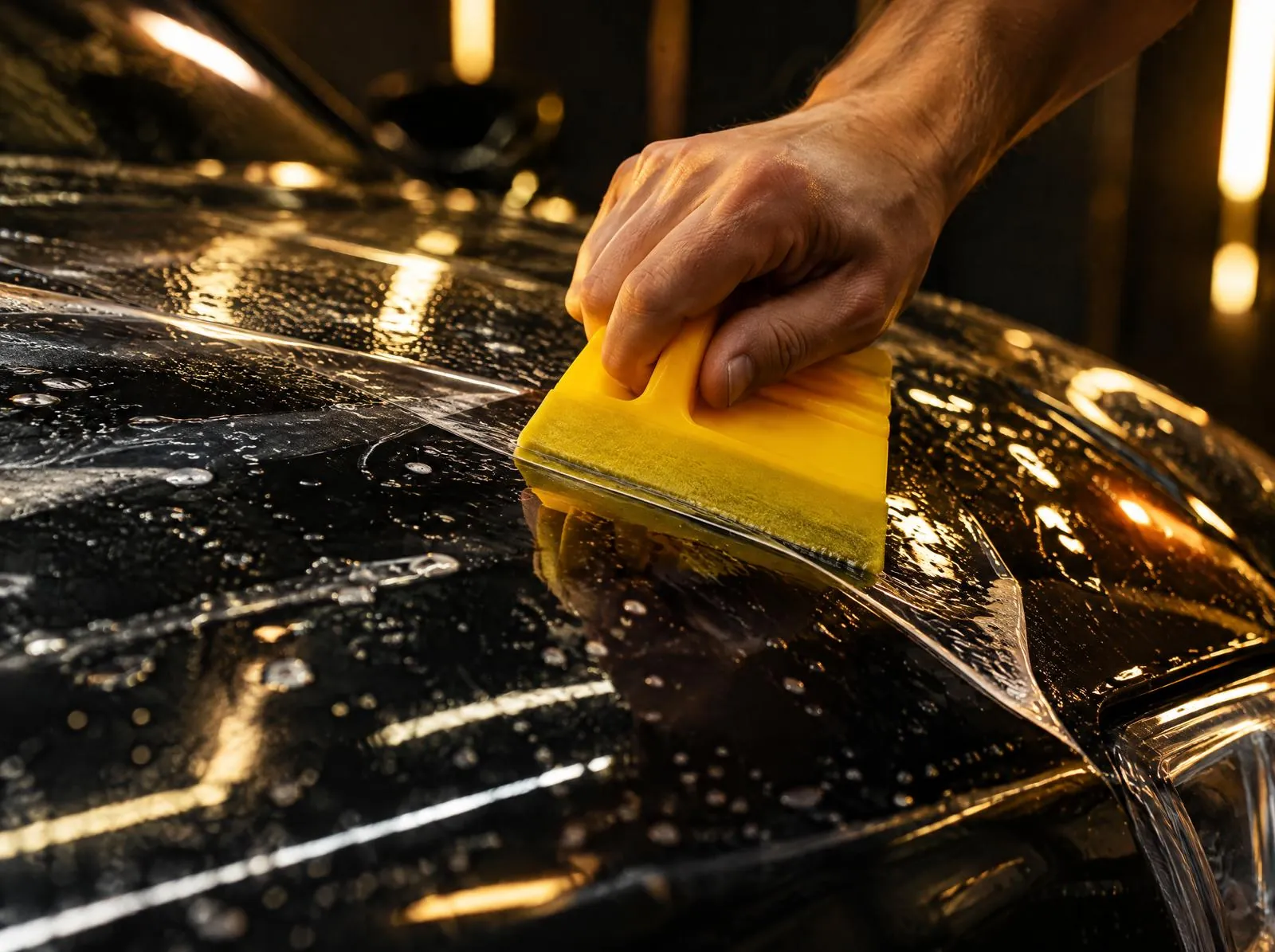
Canadian roads are hard on a car’s finish. Brine and road salt for months, swings from −20 °C to +30 °C, plow grit, spring potholes full of sand, and strong summer sun. All of that works on your paint, and on the film protecting it. So how long does PPF really last here?
The short answer
Quality PPF in Canada typically lasts five to ten years. With a careful install and regular care, around eight years is a realistic expectation for a daily driver. Film quality, install quality, how you drive and how you look after it make up the difference between the low end and the high end of that range.
Why Canada is hard on PPF
Road salt and brine
Salt and liquid brine collect along film edges and seams. Left there for weeks, they speed up wear on the top coat and can slowly work at the edge bond. Regular rinsing through the winter is the single best habit for film life, and it’s good for the rest of the car too.
Freeze-thaw cycles
Film and paint expand and contract as temperatures swing, and in a lot of the country that happens dozens of times a winter. A good install handles this without complaint. A rushed one, with over-stretched film or poorly sealed edges, is usually where lifting starts.
Sand, gravel and plow debris
This is exactly what PPF is for. Each impact gets absorbed by the film instead of chipping the paint. But over the years, thousands of tiny hits slowly dull the surface of the film, especially on the bumper and the front edge of the hood.
Summer UV
Long summer days are hard on any exterior surface. Modern films are UV-stable and resist yellowing far better than films from ten or fifteen years ago, but no film lasts forever in the sun. Cars parked outside year-round see this more than garaged ones.
How it varies across the country
Canada isn’t one climate, and film life follows the conditions.
- Ontario and Quebec: long salt seasons and heavy highway traffic. Edges and lower panels work hardest. Winter rinsing matters most here.
- The Prairies: gravel roads, big temperature swings and chinook thaws in parts of Alberta. Front ends take a lot of impacts, so the bumper and hood leading edge wear first.
- British Columbia’s coast: milder winters and less salt in many areas, but lots of rain and grime. Film often ages more gently here if it’s kept clean.
- Atlantic Canada: salt on the roads and salt in the air. Regular washing and checking edges pays off.
- The North: extreme cold and long gravel stretches. Expect the front end to work hard and plan on replacing high-impact pieces sooner.
What decides how long your film lasts
| Factor | Shorter life | Longer life |
|---|---|---|
| Film quality | Cheap film: yellowing or cracking within a few years | Quality film: 8 to 10 years, longer warranties |
| Install | Over-stretched, poorly sealed: problems in 1 to 3 years | Careful, well-sealed: 6 to 8+ years |
| Driving | Daily winter highway commuting: about 5 to 7 years | Garaged, lighter use: close to 10 years |
| Maintenance | Salt left on for weeks | Regular rinsing and pH-neutral products: adds years |
Signs your film is ageing
- Early: a slight loss of gloss, fine swirl marks that take longer to heal
- Mid-life: minor edge lifting, light haze, small stains that don’t wash off
- Late: yellowing, brittleness or cracking, adhesive letting go along edges
Seeing one or two early signs on the bumper after a few winters is normal. It doesn’t mean the whole kit is done. Most of the time you replace the one or two pieces doing the hardest work and leave the rest.
A simple winter routine
- Rinse the car every two to three weeks through the salt season, more often after a big storm. Focus on the front end and lower panels.
- Use touchless washes rather than brush washes when it’s too cold to wash by hand.
- Keep pressure-washer spray at least a forearm’s length from the paint and aim it across film edges, not straight into them.
- Don’t scrape snow and ice off the hood with anything hard. A soft snow brush is fine; an ice scraper on the hood is not.
- Dry door edges and the area around handles after a wash on very cold days so water doesn’t freeze along film edges.
A spring check-up
Once the salt season is over, give the car a proper wash and take ten minutes to look over the film in good light.
- Run a fingertip along every edge on the hood, bumper and fenders. Any lift you can feel is worth fixing now.
- Look for stains or haze on the bumper and the front of the hood.
- Check the lower doors and rockers if they’re covered. These collect the most salt.
- Note anything to keep an eye on next winter.
How to make PPF last longer
- Keep up with winter rinsing. It makes more difference than anything else.
- Choose touchless washes over brush washes.
- Keep pressure-washer spray away from film edges.
- Consider a PPF-safe ceramic coating on top for easier cleaning and a little extra stain and UV resistance. See PPF vs ceramic coating.
- Fix small problems early. Replacing one lifted piece is cheaper and easier than redoing a whole panel later.
Garage, driveway or street parking
Where the car sleeps matters. A car parked in a garage spends most of its life out of the sun and away from overnight frost, sap and bird droppings, and its film ages more slowly. A car parked on the street or in an outdoor lot gets more UV, more temperature swings and more things landing on it. That doesn’t mean film isn’t worth it outdoors. It’s often worth more there. Just expect the higher end of the lifespan range to belong to garaged cars.
What warranties usually cover
Film makers typically warranty the film itself against defects like yellowing, cracking, bubbling and peeling for a set number of years. What warranties usually don’t cover is damage from impacts, accidents, improper washing or a poor install. Read the terms for your specific film, keep proof of purchase and take a few photos after install. If something goes wrong with the film itself, that paperwork makes a claim much simpler.
When to replace it
Replace a piece when it has stopped doing its job or started to look worse than the paint would: yellowing, cracking, edges that keep lifting after cleaning, or a heavily pitted surface on the bumper. Warm the film gently so the adhesive releases, peel slowly at a low angle and clean off any residue before the new piece goes on. With a pre-cut kit, a replacement piece matches the original shape, so you’re redoing one panel, not the car.
Realistic expectations
| Setup | Typical life in Canada |
|---|---|
| Budget film or rushed install | 3 to 5 years |
| Quality film, proper install | 6 to 8 years |
| Quality film with good care, lighter use | Up to 10 years |
Eight years of protection through Canadian winters is a solid return. PPF is worth it here, as long as the film is good and it goes on properly. If you’re still deciding on coverage, the coverage packages page shows what each kit protects.
Quick answers
Does road salt damage paint protection film?
Salt left sitting on film for weeks wears the top coat and can work at edges over time. Rinsing every two to three weeks through winter prevents most of that.
Can you take a car with PPF through a car wash?
Touchless washes are fine once the film has cured. Avoid brush washes, which can scuff the top coat and catch edges.
Does PPF yellow over time?
Older films often did. Modern quality films are UV-stable and resist yellowing for most of their life, though any film will eventually age.
Find the right kit for your Tesla
Every KitCutz kit is pre-cut for your exact year and trim, and fitment is verified before you pay. Silver starts at $499 CAD, Gold at $699 and Platinum at $1,799.
Weighing up DIY kits? See how KitCutz compares.