Ask five people whether PPF is worth it and you’ll get five different answers. Ceramic coatings got better, shop prices kept climbing and paint on new cars seems to chip if you look at it wrong. So is PPF still worth paying for? We sell film kits, so keep that in mind, but we’ll also tell you when it isn’t worth it.
The short answer
Yes, PPF is still worth it in 2026, if you protect the right areas, install it properly and keep the car long enough to benefit. Film on panels that never get hit, or a sloppy install that lifts after one winter, can feel like money wasted.
What you’re paying for
- Far fewer rock chips on the hood, bumper, fenders and mirrors
- Original factory paint, which matters at resale
- No touch-up pens, no respray color mismatches
- Not wincing every time you pass a gravel truck
Modern paint is part of the story. A lot of manufacturers have moved to thinner, water-based paint systems for environmental reasons. They look great, but plenty of owners notice their new car chips more easily than their old one did. A car can look better and still be more vulnerable.
What changed in the last few years
Shop prices went up
A professional full-front install now commonly costs a couple of thousand dollars or more, and full-body work can head toward five figures on larger or more complex cars.
Ceramic coatings improved
They’re cheaper, glossier and easier to live with than they used to be. But a ceramic coating still doesn’t stop rock chips. The two do different jobs; see PPF vs ceramic coating.
DIY kits became practical
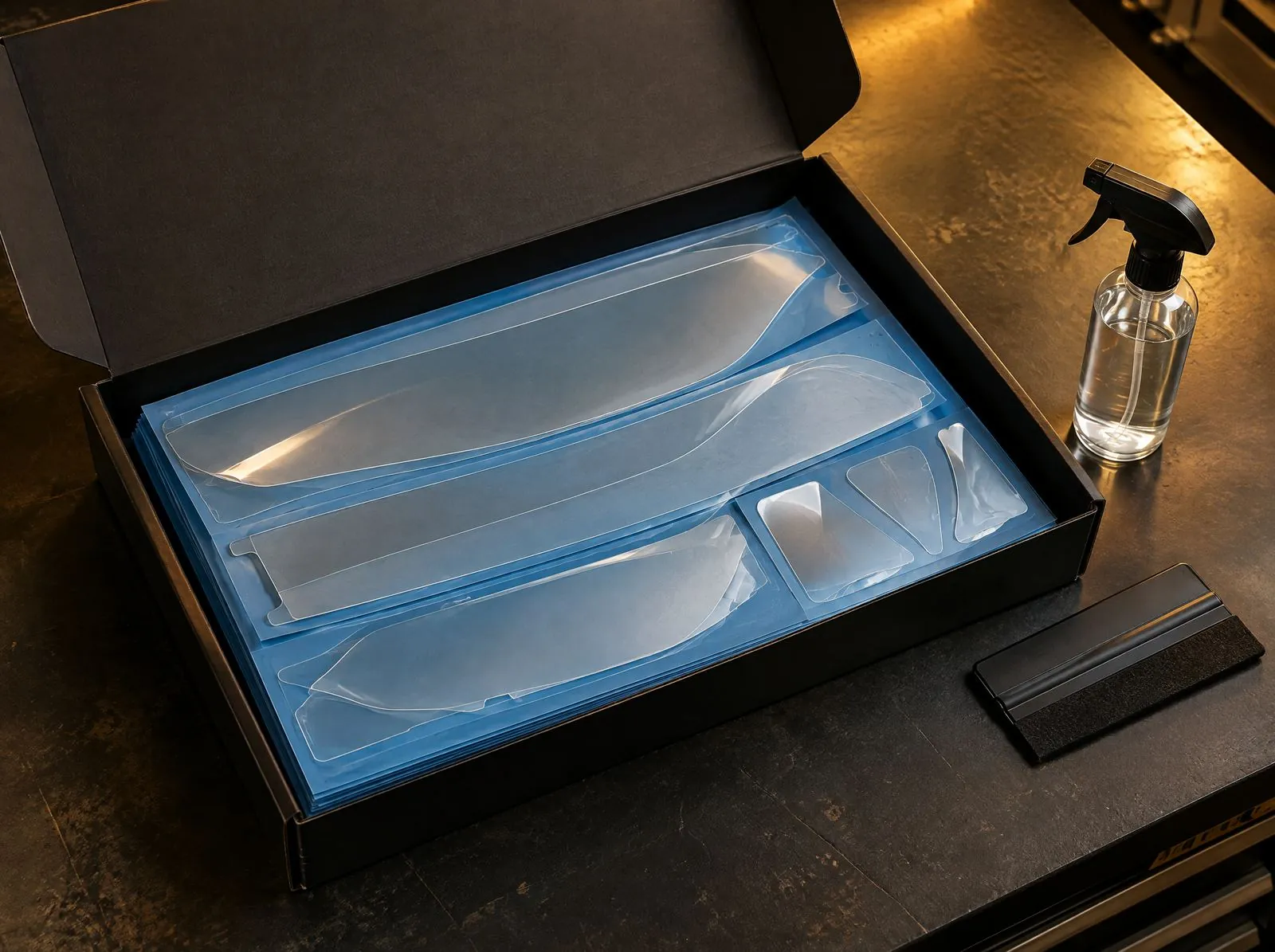
Pre-cut, vehicle-specific kits mean you can protect the high-impact areas yourself and keep a big share of that shop price in your pocket. That changes the value equation more than anything else on this list.
When PPF is clearly worth it
- You drive highways regularly. Daily commuting or following trucks means you are going to get chips.
- The car is new or expensive. Repaints rarely match perfectly and can raise questions at resale.
- You care about resale. Buyers notice a chipped hood and bumper straight away.
- You plan to keep it five years or more. The longer you own it, the more chips the film absorbs on your behalf.
- You live with a real winter. Sand, gravel and plow grit are hard on the front end.
When it might not be
- You drive very little, and almost never on highways
- You’re on a short lease and won’t recover the cost. Check your lease-return rules on chips first, though; some owners find film pays off there
- The car already has a lot of damage you aren’t planning to fix. Film covers chips; it doesn’t erase them
- You’d go for the cheapest film you can find. Bad film peels and yellows and can look worse than nothing
The math on a typical front end
Repainting a single panel commonly costs $600 to $1,200 CAD at a body shop. A front bumper and hood together can easily pass $1,500, and a respray rarely matches the factory finish perfectly. Compare that with a KitCutz Silver kit from $499 CAD or a Gold kit from $699, and it only takes one avoided repaint for film to come out ahead.
| After 2–3 years | Without PPF | With PPF |
|---|---|---|
| Front end | Chips across hood and bumper | Little to no visible damage |
| Repairs | Touch-ups or $500 to $2,000+ in paint work | Usually none |
| Resale | Chips noticed and negotiated on | Clean original paint |
Three example owners
These are made-up examples, not real customers, but they’re very common situations.
The highway commuter
Drives 80 km a day on a 400-series highway in a new crossover. Chips are guaranteed. Full front coverage (Gold) makes sense here, and it covers the whole hood so there’s no film line partway across it.
The city driver on a budget
Mostly short trips around town, a few highway runs a month. A partial front (Silver) covers the spots that get hit on those highway runs without paying for panels that rarely see trouble.
The keeper
Bought a car they love and plan to drive for ten years, with a cottage at the end of a gravel road. This is where extended coverage (Platinum) starts to pay off, especially along the rockers and lower doors.
Mistakes people still make
- Covering the wrong areas. Full body isn’t always needed. Start with hood, bumper, mirrors and fenders.
- Ignoring install quality. DIY or not, patience and technique decide the result. See five mistakes to avoid.
- Expecting it to be invisible and permanent. Film is tough, but it wears, and one day it needs replacing.
- Waiting until after the first winter. Film goes over chips, not under them. The best time is while the paint is still clean.
Resale and lease returns
When you sell privately or trade in, the front end is the first thing people look at. Chips on the hood and bumper make a car look older than it is, and buyers use them to negotiate. Clean original paint under the film helps you hold your price. The film itself can be left on, or removed before sale to reveal paint that looks close to new.
On a lease, check how your agreement treats chips and paint damage at return. Some owners find that protecting the front end avoids a charge at the end of the term. Others on very short leases don’t drive enough for it to matter. It’s worth a two-minute read of the lease terms before deciding.
Questions to ask yourself before buying
- How many kilometers do I drive a year, and how much of that is highway?
- Where did my last car get chipped or scuffed?
- How long do I realistically plan to keep this car?
- Am I up for installing it myself, with some patience?
- Is the paint in good shape now, or does it need fixing first?
Your answers will point you to a package, or tell you that you can skip it.
So, is it worth it?
Yes, if you drive regularly, care about the car and choose good film with a careful install. Probably not, if you barely drive or genuinely don’t mind chips. The better questions are: which areas do you actually need covered, will you install it yourself, and how long will you keep the car?
PPF still makes sense. Paint is softer than it used to be and repainting costs more every year. The difference now is that you don’t have to choose between a big shop bill and doing nothing. If you’re weighing options, what makes a good DIY kit is a good next read.
Quick answers
Is PPF worth it on a leased car?
That comes down to the length of the lease and how chips are charged at return. On a short, low-kilometer lease it often isn’t. On a longer lease with lots of highway driving, a partial or full front can be worth it.
Is PPF worth it on an older car?
It can be, if the paint is in good shape and you plan to keep the car. Fix chips first, because film covers existing damage rather than hiding it.
What is the minimum PPF worth getting?
For most drivers, the front of the hood and fenders, the headlights and the mirror caps. That covers the spots that chip first.
Find the right kit for your Tesla
Every KitCutz kit is pre-cut for your exact year and trim, and fitment is verified before you pay. Silver starts at $499 CAD, Gold at $699 and Platinum at $1,799.
Weighing up DIY kits? See how KitCutz compares.