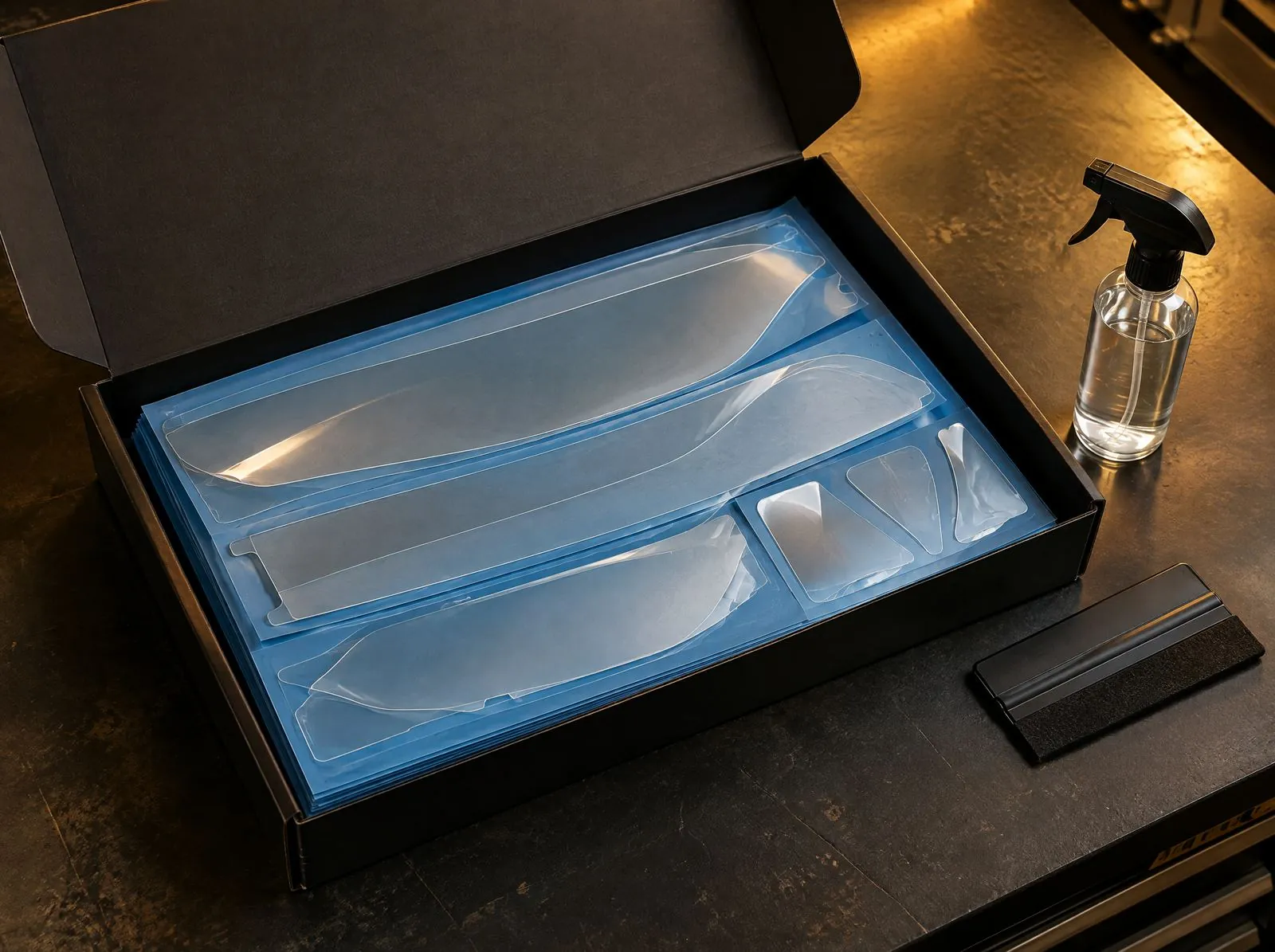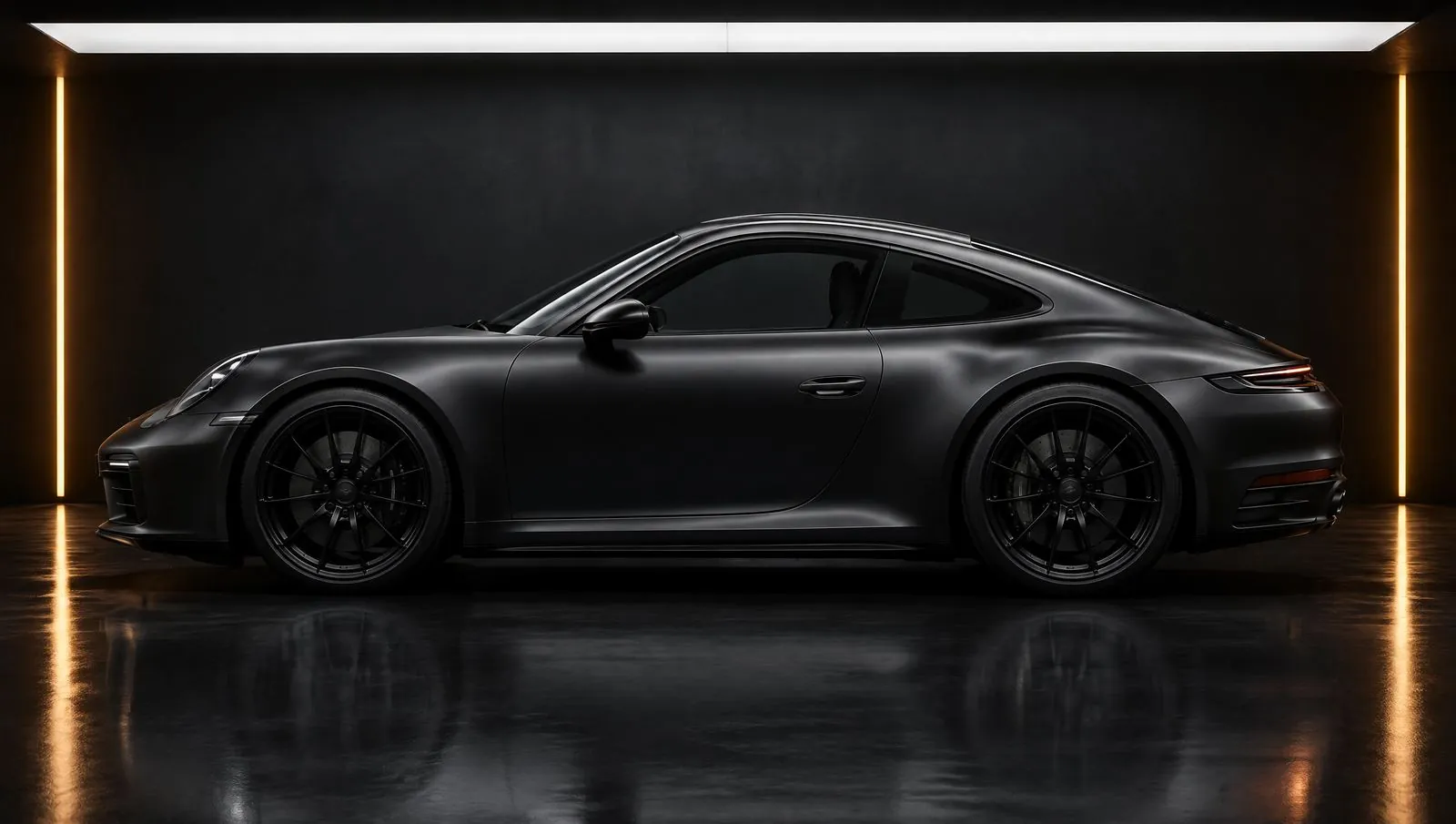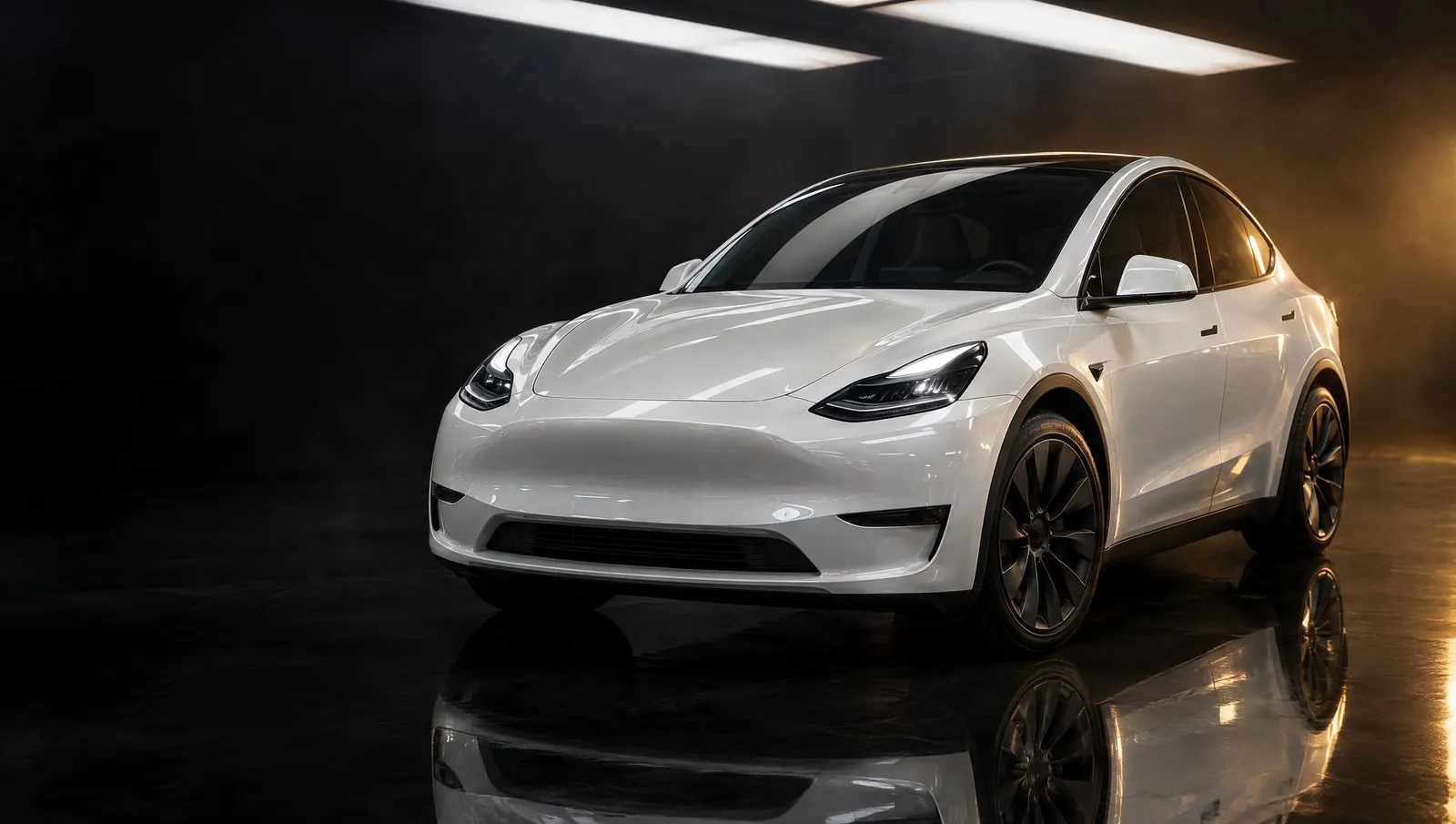
Paint protection film goes on one of two ways: pre-cut pieces made for your vehicle, or bulk film laid over a panel and trimmed in place with a blade. Both can look great. The difference in risk is bigger than most people realize, especially if it’s your first install or your car’s paint on the line.
Why the install method matters
PPF is a thin, clear layer that takes damage so your paint doesn’t. But the install matters as much as the film. Poor installs show up as visible lines, peeling corners, trapped dirt and, worst of all, knife marks in the clear coat that are there long after the film comes off.
What pre-cut means
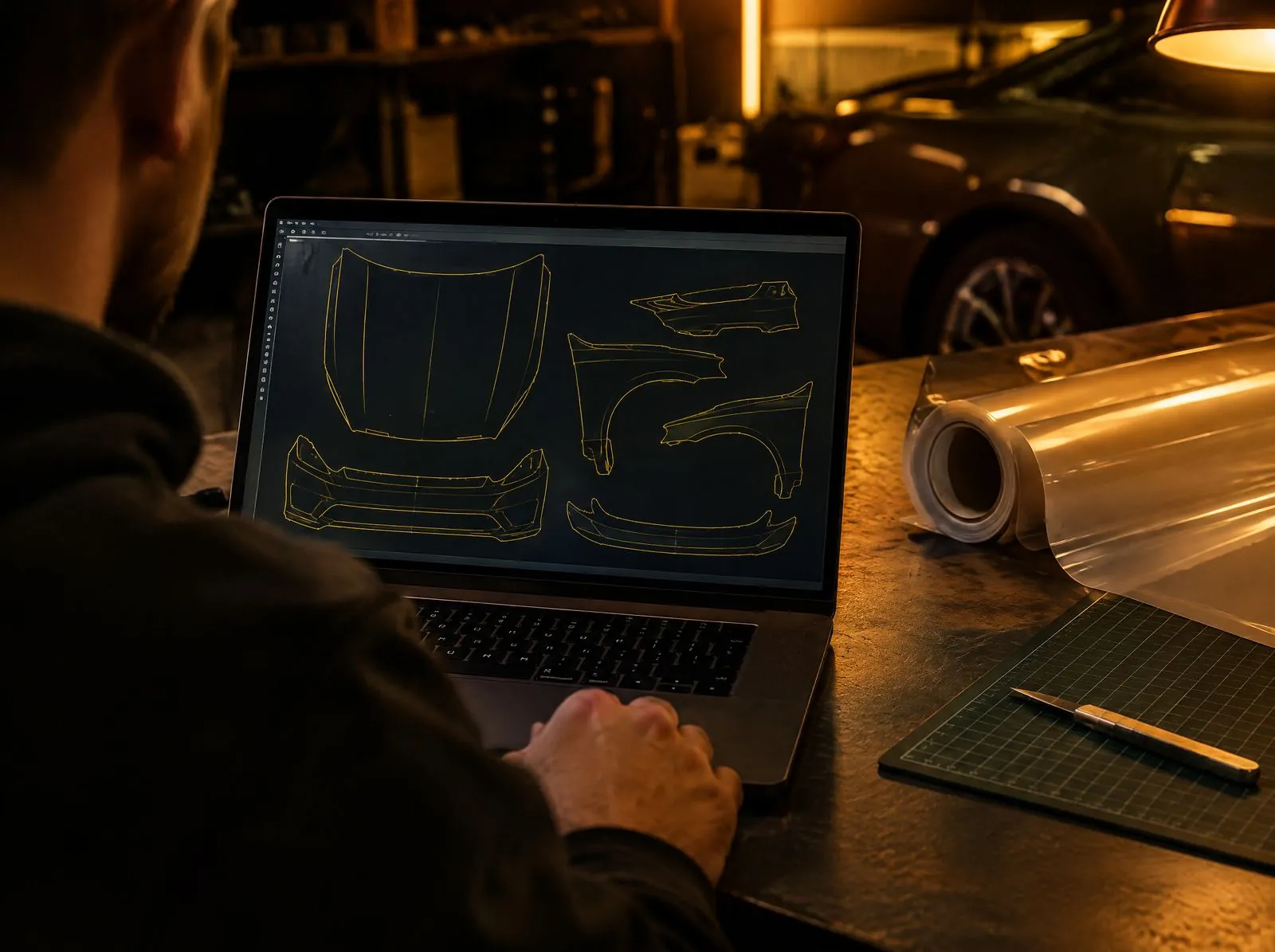
Pre-cut patterns are designed digitally for a specific make, model and year, then cut on a plotter. Good patterns are tested for alignment, edge coverage and how much the film has to stretch. The installer’s job is positioning each piece; nobody cuts on the car.
What bulk install means
The traditional method: lay a large sheet over the panel, stretch it into place and trim the edges on the car with a blade. In very skilled hands, it can look excellent. It also depends entirely on that skill, on every panel, every time.
Why pre-cut wins for most owners
1. No blade on your paint
Trimming on the car risks fine cuts in the clear coat. Some installers use a filament tape under the film to avoid this, which helps, but it’s another skill to get right. With pre-cut, the question never comes up.
2. Consistent precision
A digital pattern produces the same piece every time. A bulk install varies with fatigue, lighting and how much time is left in the day.
3. A cleaner finish
Even edges, symmetrical left and right sides, no unnecessary overlaps and tidy transitions between panels.
4. Faster installs
No measuring or cutting means less time handling the film and less time for dust to land on exposed adhesive.
5. Fewer install errors
Over-stretching, misaligned cuts and uneven tension mostly come from fitting and trimming in place. With pre-cut, you focus on placement, squeegee technique and sealing edges.
6. Built for modern cars
Sharp body lines, parking sensors, cameras, tight panel gaps and complex curves are designed into a good pattern. Bulk film has to be stretched and cut around every one of them.
7. Easy repairs
If one section gets damaged, you replace it with the same pattern. Matching an original hand-cut piece is much harder.
How a pre-cut pattern gets made
A pattern starts with the exact shape of each panel on a specific vehicle. That shape is turned into a digital template, then adjusted for the realities of film: where it needs relief cuts to bend, where it has to stop short of a gap, how much it can stretch around a curve, and where sensors, emblems or washer jets need openings. Good patterns go through rounds of test fitting before they’re used for customers.
When a kit is ordered, those patterns are cut from a sheet of film on a plotter, a computer-controlled cutter that follows the template precisely. The result is a set of pieces that fit the panels they were drawn for, and that can be cut again identically if one ever needs replacing.
What a pre-cut DIY install looks like
- Clean and decontaminate the panel properly.
- Spray the panel and your fingers with slip solution.
- Peel the liner, spraying the adhesive side as you go.
- Float the piece onto the panel and slide it into position against the body lines.
- Squeegee from the center outward to push out the water.
- Use tack solution and gentle heat to settle edges and curves.
- Leave it to cure, then inspect the edges after a few days.
No blade, no trimming and no measuring on the car. Our prep guide covers the first step in detail.
The honest trade-off: wrapped edges
The main thing bulk film does better is wrapping. A skilled installer can fold film around the edge of a hood or door so there’s no visible film edge at all. Most pre-cut patterns stop a millimeter or two short of the panel edge instead. That leaves a tiny strip of paint uncovered, but it also means there’s no film tucked into gaps where it can catch, lift or collect grime.
For most drivers, the difference is invisible at normal viewing distance. If you’re after a show-car finish where no edge can be seen even up close, a professional bulk install with wrapped edges is the way to go, and it costs accordingly.
Side by side
| Compared | Pre-cut kit | Bulk film |
|---|---|---|
| Blade on the paint | Never | Usually, unless using cutting tape |
| Consistency | Same piece every time | Depends on the installer |
| Edges | Stop just short of panel edges | Can be wrapped |
| Install time | Faster | Slower |
| DIY friendly | Yes | Experienced installers only |
| Replacing a piece | Easy, same pattern | Harder to match |
When bulk film still makes sense
- Custom builds, body kits and one-off modifications with no existing pattern
- Show-car installs where fully wrapped edges are the priority
- Professional installers who work in bulk every day and have the tools and experience for it
For most owners, and certainly for DIY, pre-cut is the safer choice.
What it costs either way
With bulk film you’re paying for the installer’s time and skill, since every piece is shaped by hand on the car. That’s why professional bulk installs with wrapped edges sit at the top end of shop pricing. Pre-cut film removes most of that labor, which is what makes DIY affordable: a KitCutz Silver kit starts at $499 CAD and Gold at $699, with the final price confirmed for your exact car before you pay.
Questions to ask any installer or kit seller
- Do you cut on the car?
- If so, how do you protect the paint while trimming?
- Where do your patterns come from, and are they for my exact year and trim?
- Are edges wrapped or stopped short?
- If a piece gets damaged later, can I get the same piece again?
The bottom line
Pre-cut means no blade on your paint, consistent quality, a clean finish and a better fit on modern cars. Bulk can do wrapped edges and one-offs, if you’re paying for an expert. When it’s your paint and your weekend, control wins. If you’re shopping for a kit, read what makes a good DIY kit next.
Quick answers
Is pre-cut PPF as good as a professional install?
The film can be identical. The difference is in edges and installation skill. A careful DIY pre-cut install looks very close to a pro install at normal viewing distance.
Why don’t pre-cut kits wrap the edges?
Most patterns stop just short of panel edges so the film doesn’t get pushed into gaps where it can catch or lift. Some patterns do wrap in places where it’s safe.
Can I cut bulk PPF myself without damaging paint?
It’s risky without experience. Cutting tape helps, but a pre-cut kit avoids the problem entirely.
Find the right kit for your Tesla
Every KitCutz kit is pre-cut for your exact year and trim, and fitment is verified before you pay. Silver starts at $499 CAD, Gold at $699 and Platinum at $1,799.
Weighing up DIY kits? See how KitCutz compares.